Feeds:

Archive for July, 2009

My golden’s optical illusion

Although you can't tell it yet in these newborns, most light colored goldens have very dark black skin.

Although you can't tell it yet in these newborns, most light colored goldens have very dark black skin.

I’ve never had a light golden retriever before. All of my prior dogs have been dark ones. So I was not prepared for this situation.

My dog has very dark skin and light yellow fur.

She also loves to get wallow in mud. If she can find a mud puddle, she’s in it, especially if the temperature is above 50 degrees.

Now, I always hose her off, so she can come inside without spreading mud all over the house. But when I’d hose her off, I noticed that the dirt was almost impossible to wash off. The more I washed her, the dirtier she looked.

Then I realized what was happening.

Her light fur was sticking close to her black skin, and the black skin was peering through that light fur, giving it a muddy appearance.

I never would have guessed that the black skin and light fur would have worked together to create such an interesting optical illusion.

If anyone else has seen this illusion in a light-colored golden, I’d love to hear about it!

Read Full Post »

Dog attack styles

Source.

I’ve posted this video before. It’s from a really interesting show on the National Geographic Channel about the dire wolf (Canis dirus).

Now, the sizes are all wrong on this video.  I’ve seen only one Dutch shepherd in my life, and it was bulkier than a Malinois, as this video says.. It was not 30 inches at the shoulder. (Yes, and I’m aware that all of these dogs are “shepherds, ” not “shepards.”)

The breeds are the Malinois, the Dutch shepherd, either a Tosa Inu or a Fila Brasileiro, and an American bulldog (of some sort). The first two are police dogs. In fact, in my part of the world, the Malinois is the police dog. I like them, but they are definitely not for me or anyone else used to a lower octane dog.

This video is really good at pointing out the diversity that exists in dogs, which is also matched in the wild.  The Arabian wolf and the extinct Shamanu or Honshu wolf  are examples of smaller wolves that specialized in hunting smaller and less robust game. They have or had smaller heads and less powerful jaws than other wolve subspecies. Conversely,  the Northern Rockies wolf, which includes the Mackenzie Valley wolf, and the Arctic wolf are larger subspecies that specialize in killing large ungulates. Their heads are very large, as are their bodies, and they possess more powerful jaws.

The dire wolf was even more robust than these subspecies. It was not significantly larger than most modern wolves. In fact, some Arctic wolves and Northern Rockies wolves are larger than the dire wolf, as are many giant breeds of domestic dog. However, it had a heavier boned body and a much larger head (but a smaller brain).  It was probably rather like the mastiff-type dog in this video in its attack style. In those days, it had lots of megafauna on which to prey, and a big dog could bring down big game. When the megafauna became extinct, it couldn’t survive well on relatively smaller prey species, which the modern wolves were experts at hunting. It probably couldn’t get enough nutrition out of those smaller species to really maintain its bulky frame.

Now, my own comparison with my own dogs definitly proved that head size and jaw strength were correlated.  My golden boxer could chew heavy bones with much more speed than my goldens ever could. Goldens haven’t been selected for very strong jaws, but boxers, which descend from bull and bear baiters and catch dogs, were selected for more powerful jaws.

Read Full Post »

Why I've Never Seen a Wild Bobwhite in West Virginia

bobwhites

With game birds, habitat is key. Without proper habitat, you’ll not have game birds. You can stock them, but without proper cover, they will fall to predation. And without proper access to cultivated fields and open pasture, the birds won’t make it long.

My grandparents and great grandparents lived in a land very different from the dense woodlands that cover most of West Virginia today. The land was used for intensive agricultural enterprises. The land was at best marginal to large scale crop production, but because they relied so much on what they could grow, they had to work as much of the land as possible.

When Europeans first came to this part of West Virginia, they cut small clearings in the forest and then shot all the wolves, cougars, and bears. They relied on wild game and domestic hogs for meat. They later took up small scale grazing of sheep and cattle. When the timber companies came in the decades following the Civil War, the forests were almost entirely cleared

Then market hunters killed off most of the white-tailed deer and wild turkeys, and everyone came to rely on domesticated animals for meat. Hog-raising and cattle husbandry became skills that were passed on from generation to generation.

As a result of having so much open land where corn and other grains could be grown, the northern bobwhites were the most common game bird.

Now, bobwhites do need some cover. They have to have it to hide from predators, and because they roost on the ground, they need some dense bushes to cover them up.

However, they do tend to thrive where there are fields of grain and pasture land. These areas are even better for them if there are some areas at the edges of the cultivated land with some of those dense thickets.

The way pastures and agricultural land was maintained in those days was to leave some “waste” at the edge of the field. The really super-powerful mowing machines were unknown in those days, and most crops and hay were cut using scythes. It would be too much effort to cut the waste at the edge of the field, so these areas were left intact for the bobwhites.

Also, because the land was open, the hawks didn’t have many perches from which to launch their attacks.  Except for the harrier, most hawks can’t hover in the air and then drop down on their prey.

By the 1970’s, though, things changed. Scientific management of forests had finally begun to pay off in West Virginia.  Agriculture became much more profitable and efficient in other areas of the country, so people were less interested in farming the high ridges. It was cheaper to buy food at the grocery store. Also, the post-war industrial boom had provided new incentives for people leave the hills and give up on hill-farming forever. As a result of these changes, the land was becoming more and more forested.

The bobwhites lost their food source, and it also became easier for the hawks to hunt them. The hawks now had far more platforms from which to swoop down on the bobwhites.

After losing much of their food souce and having lost their ability to avoid predation, bobwhite numbers began to decrease.

Then in the late 70’s, harsh winters did them in. They simply could not put up with that much snow and such low temperatures.

By the time I was born, the bobwhite had disappeared from most of West Virginia. And it hasn’t returned since.

Quail Forever’s 2008 hunting forecast for West Virginia painted a bleak picture:

With approximately three-quarters of the state in forested land, marginal habitat and limited agricultural production, bobwhite opportunities in the Mountain State remain limited. The best quail habitat lies in the Greenbrier River Valley, the eastern panhandle and in isolated pockets along the Ohio River Valley. West Virginia hunters can again expect to see a harvest of less than 1,000 bobs.

I don’t live in any of those places. And when they say “Ohio Valley,”  they mean the lower part of the Ohio Valley in West Virginia, where the land is largely flat and still open. Indeed, there are lots of large farms for corn and tobacco down there. Where I live,  you aren’t going to see anything like that.

So I live in a bobwhite-free zone. However, we have plenty of other animals. We have a growing population of wild turkeys, a sizeable population of ruffed grouse, and very good woodcock numbers. These animals didn’t do so well when the land was open and full of cornfield and pastures. And partly because the forests have returned, we now have a growing black bear population. And I don’t have to mention that we have tons of deer.

It’s not unusual to hear old-timers wax romantic about those long days in the hayfields, where they spend hour after hour swinging a scythe through the tall grass. As the sweat would pour from their brows, they would hear the little feeding calls of the bobwhites as they scurried around the fields, catching little insects and nibbling on tiny grass seeds.

But those days are past. The ubiquitous nature of the bobwhite in those days was an unnatural occurence.  Like the farmers, the little game birds relied upon an unnaturally open landscape to make their living, and once people found they no longer had farm in order to eat, the land returned to the dense forests. And these forests were no homes for the bobwhites.

Because I grew up in a land of dense forests, I was more likely to see a black bear than a bobwhite. I think I can handle the trade.

Read Full Post »

Why I’ve never seen a wild bobwhite in West Virginia

bobwhites

With game birds, habitat is key. Without proper habitat, you’ll not have game birds. You can stock them, but without proper cover, they will fall to predation. And without proper access to cultivated fields and open pasture, the birds won’t make it long.

My grandparents and great grandparents lived in a land very different from the dense woodlands that cover most of West Virginia today. The land was used for intensive agricultural enterprises. The land was at best marginal to large scale crop production, but because they relied so much on what they could grow, they had to work as much of the land as possible.

When Europeans first came to this part of West Virginia, they cut small clearings in the forest and then shot all the wolves, cougars, and bears. They relied on wild game and domestic hogs for meat. They later took up small scale grazing of sheep and cattle. When the timber companies came in the decades following the Civil War, the forests were almost entirely cleared

Then market hunters killed off most of the white-tailed deer and wild turkeys, and everyone came to rely on domesticated animals for meat. Hog-raising and cattle husbandry became skills that were passed on from generation to generation.

As a result of having so much open land where corn and other grains could be grown, the northern bobwhites were the most common game bird.

Now, bobwhites do need some cover. They have to have it to hide from predators, and because they roost on the ground, they need some dense bushes to cover them up.

However, they do tend to thrive where there are fields of grain and pasture land. These areas are even better for them if there are some areas at the edges of the cultivated land with some of those dense thickets.

The way pastures and agricultural land was maintained in those days was to leave some “waste” at the edge of the field. The really super-powerful mowing machines were unknown in those days, and most crops and hay were cut using scythes. It would be too much effort to cut the waste at the edge of the field, so these areas were left intact for the bobwhites.

Also, because the land was open, the hawks didn’t have many perches from which to launch their attacks.  Except for the harrier, most hawks can’t hover in the air and then drop down on their prey.

By the 1970’s, though, things changed. Scientific management of forests had finally begun to pay off in West Virginia.  Agriculture became much more profitable and efficient in other areas of the country, so people were less interested in farming the high ridges. It was cheaper to buy food at the grocery store. Also, the post-war industrial boom had provided new incentives for people leave the hills and give up on hill-farming forever. As a result of these changes, the land was becoming more and more forested.

The bobwhites lost their food source, and it also became easier for the hawks to hunt them. The hawks now had far more platforms from which to swoop down on the bobwhites.

After losing much of their food souce and having lost their ability to avoid predation, bobwhite numbers began to decrease.

Then in the late 70’s, harsh winters did them in. They simply could not put up with that much snow and such low temperatures.

By the time I was born, the bobwhite had disappeared from most of West Virginia. And it hasn’t returned since.

Quail Forever’s 2008 hunting forecast for West Virginia painted a bleak picture:

With approximately three-quarters of the state in forested land, marginal habitat and limited agricultural production, bobwhite opportunities in the Mountain State remain limited. The best quail habitat lies in the Greenbrier River Valley, the eastern panhandle and in isolated pockets along the Ohio River Valley. West Virginia hunters can again expect to see a harvest of less than 1,000 bobs.

I don’t live in any of those places. And when they say “Ohio Valley,”  they mean the lower part of the Ohio Valley in West Virginia, where the land is largely flat and still open. Indeed, there are lots of large farms for corn and tobacco down there. Where I live,  you aren’t going to see anything like that.

So I live in a bobwhite-free zone. However, we have plenty of other animals. We have a growing population of wild turkeys, a sizeable population of ruffed grouse, and very good woodcock numbers. These animals didn’t do so well when the land was open and full of cornfield and pastures. And partly because the forests have returned, we now have a growing black bear population. And I don’t have to mention that we have tons of deer.

It’s not unusual to hear old-timers wax romantic about those long days in the hayfields, where they spend hour after hour swinging a scythe through the tall grass. As the sweat would pour from their brows, they would hear the little feeding calls of the bobwhites as they scurried around the fields, catching little insects and nibbling on tiny grass seeds.

But those days are past. The ubiquitous nature of the bobwhite in those days was an unnatural occurence.  Like the farmers, the little game birds relied upon an unnaturally open landscape to make their living, and once people found they no longer had farm in order to eat, the land returned to the dense forests. And these forests were no homes for the bobwhites.

Because I grew up in a land of dense forests, I was more likely to see a black bear than a bobwhite. I think I can handle the trade.

Read Full Post »

Timothy Treadwell and his relationship with the foxes

timothy-treadwell-fox

Now I’ve always thought that Timothy Treadwell (“The Grizzly Man”) was not very wise to get close to the bears.

However, I’ve found his relationship with the foxes far more interesting. Here’s a clip of Treadwell playing with his fox friend. If you ever watch the show on Animal Planet, he had a lot of friendly foxes living with him at his camp. The foxes were scavenging off of him or had learned this behavior from tourists feeding them.

However, red foxes are somewhat social animals, and it is possible that they somewhat enjoyed their time with Treadwell.

I think that’s how wild wolves were. They were once like red foxes in a national park. They had never been shot or poisoned by people. And for some reason, they were curious about humans. Curiosity had to have been a major cause of the wolf’s success as a species, just as it is has been for us and red foxes. Curiosity allows animals to find new food sources and to inhabit new territories.

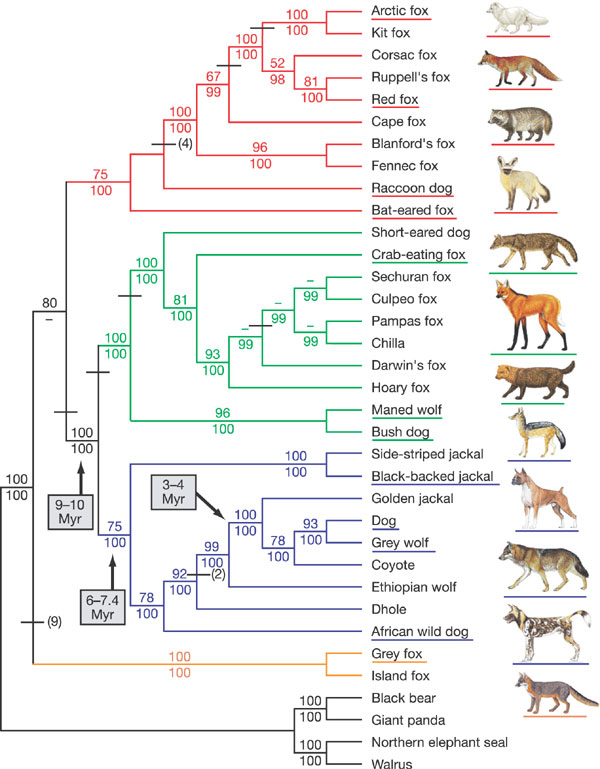
Some of these wolves probably got very accustomed to living near human camps, and these animals became exceedingly tame.  Those creatures were the ancestors of the domestic dog. When we say dogs evolved from wolves, we actually mean that dogs and wolves have a common ancestor. The ancestor of both had to have been much more curious and docile than modern wolves are.

When we began to persecute wolves after we  gave up hunting and gathering to become herdsmen, we unintentionally selected for wolves that were reactive and nervous animals, animals that were so fearful and reactive that they are currently almost impossible to domesticate.

I do feel sorry for Timothy Treadwell. I think his heart was in the right place, but he went too far with the bears. However, I think we can learn something from his relationship with those foxes. Perhaps it is a glimpse into how our relationship with another canid once was.

Read Full Post »

One breed that has always intrigued me

Source

Now, I am aware that the Large Munsterlander is an HPR breed. They are also used to hunt boars and foxes in Germany, so they have undergone some selective pressures that retrievers have not. They also point, which means they have a different sort of motor pattern added to their hunting motor patterns.

However, their movements and mannerisms remind me so much of my first working strain golden. Moderate in bone and feather and just as useful as a varmint dog as a retriever.

I’ve said that if the working strain goldens no longer have a viable gene pool, I’ll move onto this breed. However, I do plan on owning one of these dogs regardless of what happens.

As some of my readers know, I’m of German ancestry. I’ve always admired the native dogs of my ancestors’ country of origin, but I liked golden retrievers, which are where my other ancestors came from– Scotland.

Now, I’ve read that the Large Munsterlanders are derived from black and white Langhaars.  Langhaars are liver or liver roan dogs. They are not black and white dogs. However, the other German HPRs, like the Drahthaar and the Kurzhaar, come with black and black and white coloration. Those fanciers who wanted black and white langhaars bred their own dogs and formed their own registry.

It’s not all that dissimilar to why golden retrievers split off the flat-coated retriever gene pool. The fancy preferred a certain color, and those who had the “wrong colors” split off and formed their own breed.

From what I’ve seen of the Large Munsterlander doing retriever work, I can say that I’m impressed.  I like their conformation and running and swimming style. They are also well-known for their good noses and ability to retrieve game shot in heavy cover,and for their very high levels of trainability.

Of course, as soon as someone gets one, there will be all sorts of discussion with those who don’t know what they are. Are they like an English setter? Are they some kind of weird retriever?

Of course, I still love golden retrievers, but can’t I also admire non-retrievers, like Patterdales and Large Munsterlanders?

Read Full Post »

An example of a very poor working retriever

Source.

Not only does the dog have very poor physical conformation, the behavioral conformation is totally off!

Read Full Post »

« Newer Posts - Older Posts »

Follow