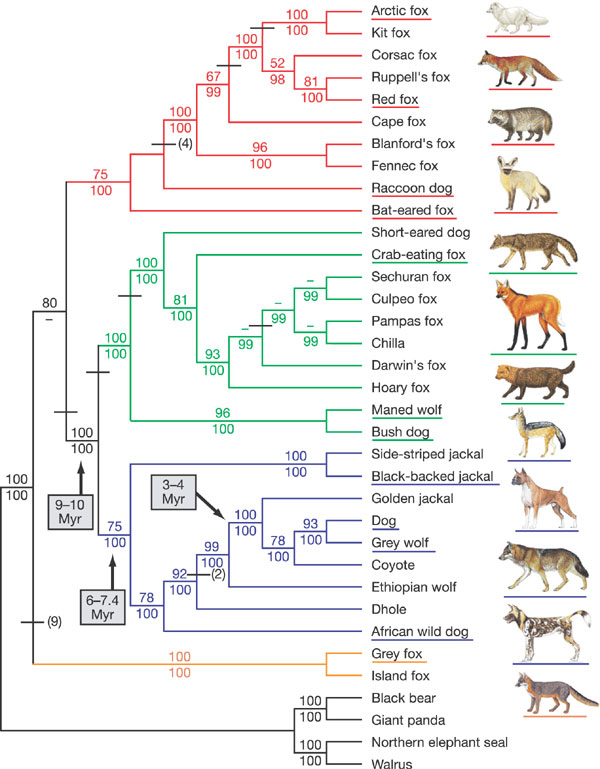
In wild dogs, a general rule exists: pack hunters are generally larger wild dogs–dholes, wolves, and Lycaon pictus. These animals live in packs to bring down large prey. Smaller wild dogs tend to be solitary hunters or scavengers, even if they do live in family groups.
Two exceptions to this rule exist:
One of these is the Ethiopian wolf, which is a relatively large wild dog that is closely related to Canis lupus. It lives in packs, but its diet is mostly rodents. Its pack behavior has nothing to do with its size or diet.
Then there is the bush dog or vinegar dog (Speothos venaticus). It generally weighs only 11 to 15 pounds.
It lives in packs of 10 to 12 individuals, which communicate with each other with high pitched whines as they charge through the undergrowth.
Its typical prey is the lowland paca. Although not a large species, it does exceed the bush dog in size, often weighing as much as 25 pounds.
If the bush dogs were not pack hunters, they would probably have trouble bringing down this large rodent. After all, bush dogs are not much larger than foxes, and foxes typically don’t bring down prey much larger than rabbits.
So here, we have an exception to the rule that all pack hunting wild dogs are large.
Oh, and I couldn’t do post on bush dogs without showing you the rather strange way they mark their territories:
http://www.arkive.org/bush-dog/speothos-venaticus/video-12.html
These dogs actually do “hand stands” to place urine higher up the tree.
This behavior is actually not unknown among small domestic dogs that think that have very high opinions of themselves.