• Home
  • About
  • Contact
  • Patreon
  • Premium Membership
  • Services

Natural History

by Scottie Westfall

Feeds:
« The famous peppered moth story
Where was this photo taken? »

Domesticated Culpeo

July 19, 2010 by SWestfall3

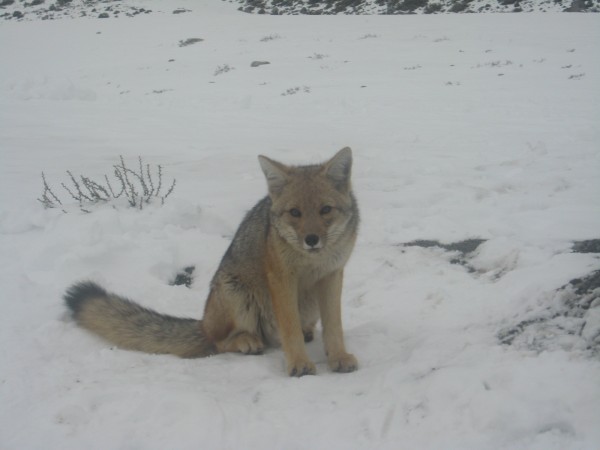
Wild culpeo.

I had read of this domestication, but I did not know that a taxidermied specimen existed. The perro yagán was a domesticated culpeo that lived in the camps of the Yagán, an indigenous people of Tierra del Fuego. This taxidermied specimen has spots and shorter legs that the wild version, which are both traits we associate with domestication in canids.

Culpeos are known to beg for food, and they generally don’t have much fear of people.  The origin of their name has to do with the way they steal from people, raid chicken coops, and kill lambs.

There is some evidence that the warrah or Falkland Islands wolf was also domesticated. It is often suggested that it was domesticated on the mainland and then transported to those islands.

It is definitely known that Channel Islands foxes were introduced to the most remote of their insular range through this same process. Yes, these foxes were also semi-domesticated.

Canid domestication is something that has happened throughout history. There have been attempts, but only one has truly been successful.

The domestication of C. lupus has been very different from the others.

It certainly raises a question about why the domestication of C. lupus was so successful.

I’ve always thought that the dhole was a better candidate for domestication than C. lupus, but the dholes have never been domesticated. Dholes have been kept as pets, and they have been known to run with pariah dogs in packs.

I have never heard of dholes interbreeding with domestic dogs, so we can definitely discount the dhole as their ancestor.

It would be interesting to see if there were other forms of semi-domesticated wild dog, just to see if we can make comparisons to the process in which dogs were domesticated.

This is one find that has my imagination spinning.

***

The South American “foxes” are actually derived from the same evolutionary root that gave us the genus Canis and its allies, Cuon and Lycaon. The same goes for all the South American wild dogs.

The culpeo and other South American foxes are in the genus Lycalopex, which is derived from the Greek words Lycaon (which means wolf) and Alopex (which means fox). They are literally “wolf foxes.”  They are more closely related to wolves, but they have evolved into a fox-like form.

At one time, I called these animals “zorros,” which refers to the Spanish word for fox. However, this name makes things confusing to Spanish speakers.

The truth is we don’t have a very good English word for these canids. I just call them South American foxes.

However, here is something confusing. The gray fox that lives in the US has a range that extends all the way to Colombia and Venezuela. One of the Lycalopex foxes is called a gray fox. If I say South American gray fox, how do you know which animal I’m referring to?

Maybe I’m over-thinking this, but the English language is limiting here.

Posted in wild dogs, wildlife | Tagged culpeo, dog domestication, perro yagan | 7 Comments

7 Responses

  1. on July 19, 2010 at 10:50 am HTTrainer

    You could sound erudite and use the latin names if it helps distinguish these critters.


  2. on July 19, 2010 at 7:30 pm blkgldn-n-labmix

    Interesting. Most biologists consider something essential if it has evolved in a different form in vastly different animals–for example, insects have eyes, and mammals and birds and fish have eyes, but the insect eyes have nothing evolutionary in common with the other eyes except that both see. Same with ears (think crickets, on their legs).

    The idea that humans in very different places with very different canids have somehow tried to domesticate them independent of other populations’ attempts to domesticate canids–and some reciprocal attempt on the canids’ part to become domesticated–might point to some essential needs that must be fulfilled?

    Perhaps that is too Romantic, however.


  3. on July 19, 2010 at 11:55 pm Jess

    Interesting that the taxidermied specimen has white markings.


  4. on July 21, 2010 at 11:17 pm Bush dogs hunting a turtle « Retrieverman's Weblog

    […] animals by several indigenous groups. They have never reached the level of the domesticated culpeo, but they have been kept as […]


  5. on August 16, 2010 at 4:03 pm Camp wolves « Retrieverman's Weblog

    […] in some members of Canis lupus, they probably would have started down the road of domestication. The domesticated culpeo definitely was starting down that path. The people of Tierra del Fuego were hunter-gatherers, yet […]


  6. on January 5, 2013 at 9:39 pm Krawa Cornix

    As for the south american grey fox (Lycalopex griseus), there actually is another word that can be used for this species: Chilla. I constantly use this name to avoid confusion with the Urocyon species.


    • on January 5, 2013 at 10:12 pm retrieverman

      I use chilla now. I don’t know why but for some reason when I wrote that post, I didn’t think chillas and gray foxes were the same thing.

      The old name for the gray fox is “Virginia fox,” which is probably more accurate than gray fox. Most foxes are gray.


Comments are closed.

  • Like on Facebook

    The Retriever, Dog, and Wildlife Blog

    Promote Your Page Too
  • Blog Stats

    • 9,815,030 hits
  • Retrieverman’s Twitter

    • one person unfollowed me // automatically checked by fllwrs.com 11 hours ago
    • one person followed me // automatically checked by fllwrs.com 1 month ago
    • one person unfollowed me // automatically checked by fllwrs.com 2 months ago
    • @TetZoo Cougars/Puma/Mountain Lions have kittens, as do cheetahs because they are not Pantherines. 2 months ago
    • @SergioStalino Message me. I got lots of tips on catching and cooking. 2 months ago
  • Google rank

    Check Google Page Rank
  • Archives

    • September 2020
    • August 2020
    • July 2020
    • June 2020
    • May 2020
    • April 2020
    • February 2020
    • January 2020
    • December 2019
    • November 2019
    • October 2019
    • September 2019
    • August 2019
    • July 2019
    • June 2019
    • May 2019
    • April 2019
    • March 2019
    • February 2019
    • January 2019
    • December 2018
    • November 2018
    • October 2018
    • September 2018
    • August 2018
    • July 2018
    • June 2018
    • May 2018
    • April 2018
    • March 2018
    • February 2018
    • January 2018
    • December 2017
    • November 2017
    • October 2017
    • September 2017
    • August 2017
    • July 2017
    • June 2017
    • May 2017
    • April 2017
    • March 2017
    • February 2017
    • January 2017
    • December 2016
    • November 2016
    • October 2016
    • September 2016
    • August 2016
    • July 2016
    • June 2016
    • May 2016
    • April 2016
    • March 2016
    • February 2016
    • January 2016
    • December 2015
    • November 2015
    • October 2015
    • September 2015
    • August 2015
    • July 2015
    • June 2015
    • May 2015
    • April 2015
    • March 2015
    • February 2015
    • January 2015
    • December 2014
    • November 2014
    • October 2014
    • September 2014
    • August 2014
    • July 2014
    • June 2014
    • May 2014
    • April 2014
    • March 2014
    • February 2014
    • January 2014
    • December 2013
    • November 2013
    • October 2013
    • September 2013
    • August 2013
    • July 2013
    • June 2013
    • May 2013
    • April 2013
    • March 2013
    • February 2013
    • January 2013
    • December 2012
    • November 2012
    • October 2012
    • September 2012
    • August 2012
    • July 2012
    • June 2012
    • May 2012
    • April 2012
    • March 2012
    • February 2012
    • January 2012
    • December 2011
    • November 2011
    • October 2011
    • September 2011
    • August 2011
    • July 2011
    • June 2011
    • May 2011
    • April 2011
    • March 2011
    • February 2011
    • January 2011
    • December 2010
    • November 2010
    • October 2010
    • September 2010
    • August 2010
    • July 2010
    • June 2010
    • May 2010
    • April 2010
    • March 2010
    • February 2010
    • January 2010
    • December 2009
    • November 2009
    • October 2009
    • September 2009
    • August 2009
    • July 2009
    • June 2009
    • May 2009
    • April 2009
    • March 2009
    • February 2009
    • January 2009
    • December 2008
    • November 2008
    • October 2008
    • September 2008
    • August 2008
    • July 2008
  • Recent Comments

    The Evolving Natural… on So does the maned wolf break t…
    SWestfall3 on So does the maned wolf break t…
    Ole Possum on So does the maned wolf break t…
    kuymal on The Thylacine was more a marsu…
    Kerry Rogers on The Thylacine was more a marsu…
  • Meta

    • WordPress.com
  • Pages

    • About
    • Contact
    • Patreon
    • Premium Membership
    • Services
  • Subscribe to Retrieverman's Weblog by Email
  • Revolver map

    Map

  • Top Posts

    • Were Romulus and Remus really nursed by a she-wolf?
  • SiteCounter


  • Donate to this blog

  • Top 50 Northwest Dog Blogs

    top 50 dog blogs

Blog at WordPress.com.

WPThemes.


Loading Comments...
 

    %d bloggers like this:
