• Home
  • About
  • Contact
  • Patreon
  • Premium Membership
  • Services

Natural History

by Scottie Westfall

Feeds:
« First felony dogfighting arrest in West Virginia history
The Truth about the Fossil Record »

Eighteenth century depiction of a wolf hunt

January 13, 2011 by SWestfall3

This painting is by Gerard Rysbrack, and like many middle and late eighteenth century paintings, it is amazing in its anatomical correctness.

The head of the wolf is so much larger than that of the hounds. It is also a significantly larger animal.

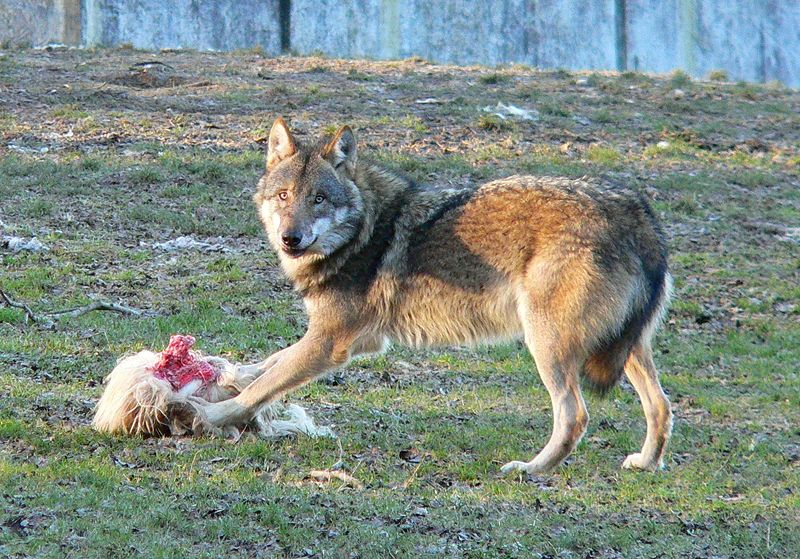
But more amazing to me is how the artist got the wolf color correctly. The common wolf (Canis lupus lupus) usually has a tan muzzle that has some white points around the lips. (Compare with this living specimen of the same subspecies.)

Hounds of this type that grapple with the big game hunting wolves of the northern parts of Eurasia and North America generally have a high mortality rate.  Although the hounds may have been used to hunt deer and wild boar, their lives have never depended upon killing such dangerous prey. The wolf, by contrast, has evolved to kill these animals– and must engage in this sort of dangerous fighting virtually every time it wants to eat fresh meat. As a result of its lifestyle, the wolf has much more practice fighting than the dogs do.

Furthermore, the hounds do not have the physical adaptations, such as the big teeth, jaws, and muscles that control the jaws, that the wolf has.  Humans have also selected for floppy, pendulous ears in their scenthounds, which is makes the dogs look very civilized and cute. However, in this context, it gives the wolf  more of an opportunity to grab the dog by the ear and jerk its scalp off, which is one reason why many livestock guardian dogs have their ears cropped.

(Here is a photo a bear hound that a wolf scalped in this fashion. Warning: graphic image. And here is another that survived.)

Traditionally, the dogs used to hunt wolves were not scenthounds. Most wolf hunting breeds have either been sighthounds or mastiffs. (Or in the case of the Irish wolfhound and Spanish lebrel– a combination of sighthound and mastiff). Sighthounds were used to hunt wolves because they could catch a wolf on the run before it had a chance to stand and fight. Although sighthounds are slighter animals than wolves are, if they can catch and hold a wolf before it can fight them, they would have the advantage.

The Russians would use packs of scent hounds to find the the wolf, and then they would release two or three borzoi to catch it, which they did by grabbing it by the ears or neck and holding it in a very similar fashion to the way catch dogs hold feral pigs. Then the hunter would ride up and dispatch the wolf.

Mastiffs and sighthounds with mastiff in them would actually try to kill the wolf. However, it takes a big, tough dog to kill a wolf in a battle. In proportion to their body size, dogs have smaller heads and teeth than wolves do, so it was necessary to breed really big dogs if someone wanted them to fight wolves. This is probably the main selection pressure that drove the Irish wolfhound to its great size. If we are to believe saga and ancient texts, Irish wolfhounds were originally larger dogs than they are today, and their fighting prowess was renowned.  They were known for beating fighting bulldogs and mastiffs in dog fights, simply because they were no challenge compared to a wolf. The Spanish lebrel (a type of Spanish wolfhound) was so expert at grappling with wolves that they were used in war and in genocidal campaigns against the indigenous people of the New World.

Using packs of scenthounds against wolves was much less efficient than using sighthounds, sighthound/mastiffs, or mastiffs, but it may have been deemed more sporting in the eighteenth century. Nobles kept packs of hounds that were bred to look uniform. The dogs in the Rysbrack painting look very similar to foxhounds that one would find throughout the British Isles, but these dogs have been put after an animal a little harder to dispatch than a little red fox.

Many dogs died hunting wolves. Today, whenever bear hounds are run in wolf country, a few dogs never return. These dogs are scenthounds and are very ill-equipped to defend themselves against a wolf and certainly are no match for a pack. Of course, dogs that run black bears have a hazardous occupation anyway, but although they can put a single black bear into a tree, they can’t fight a wolf that really wants them dead.


Posted in dog breeds, wild dogs, wildlife, wolves | Tagged borzoi, irish wolfhound, wolf hounds, wolf hunting, wolf kills dog, wolf predation |

  • Like on Facebook

    The Retriever, Dog, and Wildlife Blog

    Promote Your Page Too
  • Blog Stats

    • 9,712,655 hits
  • Retrieverman’s Twitter

    • 2 people followed me // automatically checked by fllwrs.com 14 hours ago
    • @TetZoo Maybe you should write a novel about dinosaur sex lakes and Hollywood gives you a movie deal? 1 week ago
    • one person followed me and one person unfollowed me // automatically checked by fllwrs.com 1 week ago
    • 2 people followed me // automatically checked by fllwrs.com 2 weeks ago
    • @aaronjmate @cenkuygur @AnaKasparian Aaron Mate is a careful, thoughtful journalist. When he was at Democracy Now!,… twitter.com/i/web/status/1… 2 weeks ago
  • Google rank

    Check Google Page Rank
  • Archives

    • September 2020
    • August 2020
    • July 2020
    • June 2020
    • May 2020
    • April 2020
    • February 2020
    • January 2020
    • December 2019
    • November 2019
    • October 2019
    • September 2019
    • August 2019
    • July 2019
    • June 2019
    • May 2019
    • April 2019
    • March 2019
    • February 2019
    • January 2019
    • December 2018
    • November 2018
    • October 2018
    • September 2018
    • August 2018
    • July 2018
    • June 2018
    • May 2018
    • April 2018
    • March 2018
    • February 2018
    • January 2018
    • December 2017
    • November 2017
    • October 2017
    • September 2017
    • August 2017
    • July 2017
    • June 2017
    • May 2017
    • April 2017
    • March 2017
    • February 2017
    • January 2017
    • December 2016
    • November 2016
    • October 2016
    • September 2016
    • August 2016
    • July 2016
    • June 2016
    • May 2016
    • April 2016
    • March 2016
    • February 2016
    • January 2016
    • December 2015
    • November 2015
    • October 2015
    • September 2015
    • August 2015
    • July 2015
    • June 2015
    • May 2015
    • April 2015
    • March 2015
    • February 2015
    • January 2015
    • December 2014
    • November 2014
    • October 2014
    • September 2014
    • August 2014
    • July 2014
    • June 2014
    • May 2014
    • April 2014
    • March 2014
    • February 2014
    • January 2014
    • December 2013
    • November 2013
    • October 2013
    • September 2013
    • August 2013
    • July 2013
    • June 2013
    • May 2013
    • April 2013
    • March 2013
    • February 2013
    • January 2013
    • December 2012
    • November 2012
    • October 2012
    • September 2012
    • August 2012
    • July 2012
    • June 2012
    • May 2012
    • April 2012
    • March 2012
    • February 2012
    • January 2012
    • December 2011
    • November 2011
    • October 2011
    • September 2011
    • August 2011
    • July 2011
    • June 2011
    • May 2011
    • April 2011
    • March 2011
    • February 2011
    • January 2011
    • December 2010
    • November 2010
    • October 2010
    • September 2010
    • August 2010
    • July 2010
    • June 2010
    • May 2010
    • April 2010
    • March 2010
    • February 2010
    • January 2010
    • December 2009
    • November 2009
    • October 2009
    • September 2009
    • August 2009
    • July 2009
    • June 2009
    • May 2009
    • April 2009
    • March 2009
    • February 2009
    • January 2009
    • December 2008
    • November 2008
    • October 2008
    • September 2008
    • August 2008
    • July 2008
  • Recent Comments

    The Evolving Natural… on So does the maned wolf break t…
    SWestfall3 on So does the maned wolf break t…
    Ole Possum on So does the maned wolf break t…
    kuymal on The Thylacine was more a marsu…
    Kerry Rogers on The Thylacine was more a marsu…
  • Meta

    • WordPress.com
  • Pages

    • About
    • Contact
    • Patreon
    • Premium Membership
    • Services
  • Subscribe to Retrieverman's Weblog by Email
  • Revolver map

    Map

  • Top Posts

    • The past 100 years have not been kind to the pekingese in the West
  • SiteCounter


  • Donate to this blog

  • Top 50 Northwest Dog Blogs

    top 50 dog blogs

Blog at WordPress.com.

WPThemes.


Loading Comments...
Comment
    ×
    %d bloggers like this: