Feeds:

Archive for the ‘dog breeds’ Category

Konrad Lorenz’s Krokodil

dachshund crocodile

Today, there much talk about a flesh-eating drug called “Krokodil,” which is derived from the Russian* word for crocodile. There is quite a bit of paranoia about the drug spreading to the US, but it doesn’t seem likely at this time.

However, every time I see a report about this drug, I instantly think of a dog– more specifically, a dachshund.

The dog is written about at length in Konrad Lorenz’s Man Meets Dog (1949). Lorenz was one of the founders of the science of ethology, and wrote extensively about dogs and other domestic animals. He is perhaps best known for the modern interpretation of the theory of imprinting, which posits that certain animals, particularly birds, come to identify their parent species by attaching themselves to the first moving object or living thing they see.

He is also famous for the discredited hypothesis that most dogs are derived from golden jackals and only a few dogs have wolf in them. The jackal dogs were juvenile and friendly toward everyone, while the wolf-derived dogs were one-mannish and reserved.

The dog named Krokodil was a jackal dog. He was purchased to replace a real crocodile that was given to Lorenz when he was a young boy:

I shall begin with the example of a dog whose apparently touching juvenile affection was so exaggerated as to result in the positive caricature of a dog.  It was a dachshund named Kroki which I was given by a kind relation with no understanding of animals.  At time I was a small boy but already an active naturalist.  The dog was called Kroki  because the kind donor had first of all presented me with a crocodile, which in the absence of heating my terrarium, refused to eat, and which we therefore exchanged in the pet shop for the animal which bore the nearest outward resemblance to it! The dachshund was an aristocratic creature, long-bodied and short-legged– truly resembling a crocodile–and its pendulous ears literally trailed the floor. He was of an affecting friendliness, and greeted me on our first acquaintance as only a dog can greet a long lost master. Of course I was flattered, until it became clear that he greeted everyone else in the same manner.  He was obsessed with an overwhelming love of humanity which extended to all mankind.  He never barked at anybody and, even though he probably preferred my family and myself, he would readily follow a stranger if we did not happen to be available.

Now, this dachshund’s behavior is utterly unlike the dachshunds I’ve known, and my grandmother’s dachshund could have also been named after the archosaur. Unlike Lorenz’s dog, she not only had the crocodile’s body, she had the crocodile’s disposition as well. She barked at everyone, and I don’t know how many different people she  bit.  She bit me and all the other grandchildren, and as a result, I have a bit of fear of smooth dachshunds. I don’t have the same reaction with the other coats– the long-haired ones look like really strange golden retrievers– but if I see small smooth one, I get a bit nervous.

In the US, the dachshund is the “wiener dog.”  I have always thought this was a stupid name.

Maybe a better name for them would be crocodile dog.

It fits them so much better!

__________________________________________________________________________________________

*Krokodil is also German for crocodile. Konrad Lorenz was Austrian and a German-speaker.


Read Full Post »

Why there will never be a brachycephalic retriever

You have to have a muzzle to hold things!

bost terrier ball

Read Full Post »

Outcross program to save the Norwegian lundehund announced

lundehund puffin

The Norwegian lundehund is one of the most inbred dog breeds in the closed registry system, and I have questioned the wisdom of including this breed into a dog population management culture that celebrates blood purity over health and good science.

Because of its peculiar adaptations for traversing rocky cliffs and squeezing down puffin burrows, there is a tendency in this breed to believe that it is too unique to have new blood added. If you add new blood, the dogs cease being lundehunds– which is actually theological reasoning and is unfortunately all too common in the world of purebred dogs.

All lundehunds alive today derive from six founders, and five of these were all from the same mother.

That is not a very large founding population, and when a breed is placed into the closed registry system and bred to a particular standard, a lot of genetic diversity will be squandered. If you start out with a population that is already quite small, the effects of such breeding practices will be magnified.

This breed has a condition known as “lundehund syndrome,” which is just a shorthand for a variety of gastro-intestinal disorders that affect this breed, which can range from mild issues of malabsorption of nutrients to cancer of the intestines. It is estimated that anywhere from 40 percent to 100 percent of this breed suffer from some variant of the disorder.

There is definitely some sort of genetic basis for the syndrome, but no one has been able to say what might be done to rectify the problem.

Further, the breed is also suffering from a general inbreeding depression, which means the breed is eventually on its way to extinction unless something is done. The breed is rapidly losing its fertility, and without new blood, they may simply become impossible to breed.

And the Norsk Lundehund Klubb (Norwegian Lundehund Club in Norway) has decided to begin an outcross program to save the breed.

The club recently announced that a lundehund had been bred to Norrbottenspets, a small treeing spitz from Norway that is known for its prowess in treeing forest grouse. The club’s announcement reads as follows:

The Norwegian Lundehund Club has initiated a project to increase the genetic diversity of Norwegian Lundehund. This is absolutely adamant now as this very special dog breed is on the verge of extiction (sic). Norwegian Lundehund is one of the most inbred dogbreeds (sic) in the world, and it shows indications of reduced fertility. In the long run, inbreeding depression might be the end of this wonderful dog breed, and we cannot sit still and watch this happen. The first cross has taken place, a Norwegian lundehund male and a female of Norbottenspets. This had to be done by insemination as the male, unfortunately, was too small. The puppies that we hope will be borne in two months time, will be registered at the Norwegian Kennel Club in an x-register, and they will not be sold on the open marked. For all of you that own a lundehund, keep up your breeding programme, as there will be many years until any individual that is a result of crossbreeding will be introduced in the true breed. We hope to save the breed, but we need your help to keep up the numbers of truebred (sic) lundehunds over the years to come. More information will be available on our homepage and fb within a few days.

So when a breed is faced with extinction through poor population management, the only solution is to make radical steps to save it.

Of course, these steps aren’t radical at all. If people were not so accepting of the tenet of faith that blood purity at all costs is a virtue in domestic dog breeds, this breed would be as healthy and viable as any other.  New blood would be brought in every couple of generations, and the population would be carefully managed.

But this concept– which is essentially without controversy in the scientific animal husbandry literature as well as the literature on population genetics– is utter heresy in the world of dogs.

To cross breeds is the ultimate sin– something that only done when there is no alternative.

It is really sad that this breed had to come to this point before the Norbottenspets outcross program was accepted.

But the truth is all of these other breeds are in the same boat. They aren’t moving at exactly the same pace as the lundehund, but they are all moving in this direction slowly but surely.

It really is time to drop the blood purity cult.

It’s just not serving the dogs well.

Period.

Read Full Post »

The Smithfield family

This morning, the two intruding “Smithfields”  came charging out with their father, a clipped Old English sheepdog.

IMG_5662

IMG_5664

Read Full Post »

Inbreeding in American bullies

Source.

I don’t know what it is, but in pit bulls and their derivatives, inbreeding is celebrated.

An American bully is an offshoot of the pit bull, which has been specifically bred to be less aggressive and to have a body that makes them resemble Tasmanian devils. However, there are other breeders of “exotic” bullies that every bit as effed up in conformation as an English bulldog or a show basset hound.

It’s a breed in formation, and because they are breeding for such different phenotype from the general pit bull and bull and terrier type, there is quite a bit of inbreeding going on.

The UKC has recently recognized the American bully as a breed, and the UKC breed standard expressly forbids the “exotic” phenotype– which certainly is a positive.

However, within the subculture, there are many dogs that remain outside the registry, and in many cases, they are very tightly bred to maintain a certain look.

Inbreeding in the established dog fancy has often been celebrated, but within the established breeds, there are many people openly questioning the virtues of such tight breeding. The effects of so much consanguinity have created populations that have genetic loads that are often too difficult manage.

It’s a road to hell that so many dog people want to follow. It’s much easier to sculpt canine flesh using DNA when you’re dealing with breeding populations that are very finite and genetically depauperate.

But as we’ve seen with virtually every closed registry purebred dog, one does not get to select for appearance alone. Not all genes are expressed in the phenotype, and selection away or toward one trait can have very bad consequences for health and temperament.

Even the most educated geneticist or molecular biologist is still ignorant of many aspects how traits are inherited. They will readily admit this to you.

However, from what I’ve seen among “dog people” is there is a tendency to act as if they know things about the genetic composition of a dog that even the most highly-educated scientist would say couldn’t be known.

And this is precisely the danger with “dog people.”

So much damage is being done  in the name of impressing other people.

So many dogs have gone down this path.

And it looks like the America bully is going to race down it– just as the Eurasier and the Cesky terrier have done before.

Breeding a nice “pit bull” that looks like a Tasmanian devil is a far nobler enterprise than breeding dogs for fighting, but it’s not going to be of much use if the dogs wind up with the genetic load problems that all the “fancy” breeds have.

Now would be the time for American bully fanciers to take a hard look at population genetics. It would mean that it would be harder to established distinct type immediately, but it would have very good long-term consequences for the health and vitality of the population.

The time to act is before the gene pool gets all sequestered off, and if the sequestration can be stopped entirely, it would be a great benefit to the dogs.


Read Full Post »

Boxer history according to Edwin Megargee

Image courtesy of Nara U.  From Megargee work in 1953.

Image courtesy of Nara U. From Megargee work in 1953. 

I’ve heard two histories of the boxer dog.

One of them is just as Megargee describes it– a dog like a dogue de Bordeaux that was bred down into a German boar catcher.

I’ve even heard it suggested that the South African boerboel is actually almost entirely derived from the Brabanter bullenbeisser, which supposedly looked like a bullmastiff or dogue de Bordeaux in its original form.  However, there is also a lot of evidence that the boerboel’s affinity with the bullmastiff comes from heavy crossbreeding from bullmastiffs that were imported by the De Beers diamond company.

I don’t know enough about boerboels to vouch for the veracity of either theory, but I do think there may be a bit of an error in assuming that the boxer was just a bred down dogue de Bordeaux or bullmastiff.

My take on it is that the original bullenbeissers were actually virtually indistinguishable from the dog that we call the Alano Español or “Spanish bulldog.”

Here’s an image of a modern alano:

alano espanol

And here are German bullenbeissers on a boar hunt:

bullenbeissers and saufinder

And here is the famous image of a German bullenbeisser:

bullenbeisser

I would even go as far as to suggest that the bullenbeissers and the alano are actually the same breed. If you think about it, it may have been that the Spanish introduced this dog to the Low Countries, which Spain once ruled, and to parts of the German-speaking world, where the Spanish and Austria Hapsburgs ruled various kingdoms and principalities.

The bullenbeissers of yore and the Spanish bulldog of today are both larger than the typical boxer, which was bred down through the use of English bulldog blood, but that was not to produce a hunting or working dog.

It was to produce a fancier version of the bullenbeisser type. Stockmann, the man quoted in the piece, actually was instrumental in changing the bulldog-type boxer back into something longer-legged and more athletic, a dog more suitable for use as a sentry and messenger dog in the First World War. (Stockmann’s prose in the preceding link is probably the best description of boxer dog behavior and attributes that I’ve ever read.)

The boxer went from being the bullenbeisser to the bulldog cross show dog back into a working bulldog.

Stockmann was correct in saying that the boxer was bred down from the bullenbeisser, but the bullenbeisser was not like a dogue de Bordeaux, a Bullmastiff, or a boerboel.  It was more like a big alano-type bulldog.


Read Full Post »

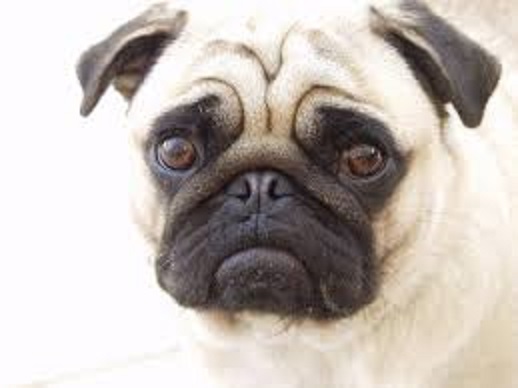
True words about pugs

pug defect

“People talk about birth defects from inbreeding, but just being a pug is a birth defect.”


Steve Jones, professor of genetics at University College London.

Read Full Post »

« Newer Posts - Older Posts »

Follow