It’s going to be one of those posts. Don’t say I didn’t warn you.
I was perusing this site on Native American dogs, when I came across something very, very wrong:
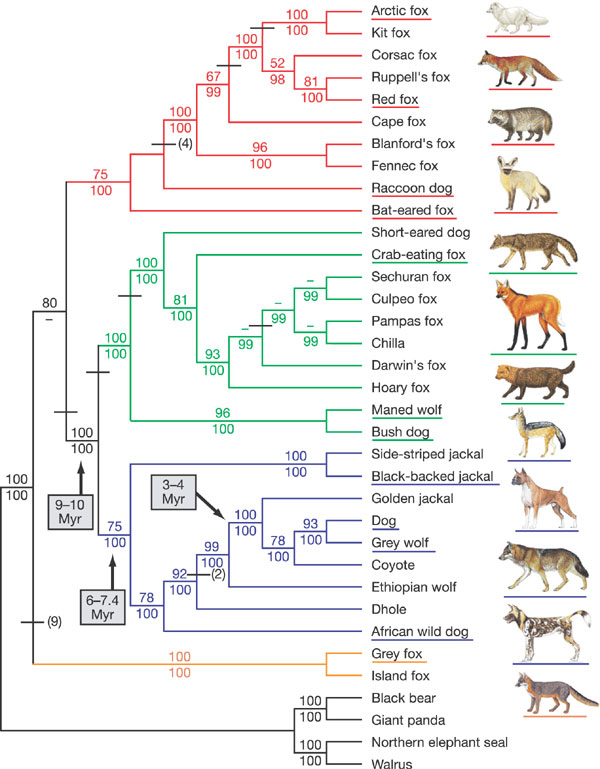
All of these primitive dogs are probably, to one extent or another, related or have very similar ancestors. The only difference is that Native Americans also developed their dogs from crossing in coyotes thousands of years ago. Where as the dogs from Africa, India and Asia used jackals and small Asian wolves that are more Jackal-like than wolf-like. With modern DNA and logical research, it’s now known that the wolf was not the ancestor of the modern dog, but coyote and jackals were the modern dog’s ancestors. Outdated research said all people and dogs migrated into the American continents across the Baring [sic] Straits [also not true– for both people and dogs!]. New, more recent research shows they also came up from the south [not a single study suggests this].
Very little of this paragraph is true. Dogs are derived from some form of Eurasian wolf, including the native dogs of North and South America. In fact, the big contention right now is where in Eurasia. Right now, the big debate is whether Savolainen’s finding that dogs come from southern China or whether the dog comes from some other part of Eurasia.
Coyotes and golden jackals played a negligible role in developing the domestic dog. The fact that many Native American dogs in North America looked a lot like coyotes is mostly circumstantial. These dogs have had their MtDNA and nuclear DNA analyzed, and they are also derived from Eurasian wolves. The only dogs that have been known to have jackal in them are the Sulimov dogs. Dogs are wolves. That case has been settled long ago.
I found a few other things that were wrong with this site. One of them is the suggestion that the largest Native American dogs (other than those of the Arctic hauling spitz variety) were the size of a Carolina dog or dingo.
I’ve read too many accounts of large wolf-like dogs in North America during the colonial period and the era of exploration to accept this theory.
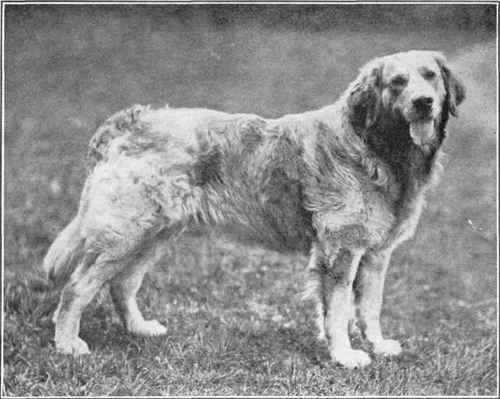
The truth is that Native Americans were expert dog breeders. They produced all sorts of different forms of domestic dog. Wool-producing dogs in the Northwest, little bear dogs that resembled chihuahuas, and the hairless dogs of Latin America are but a few varieties that the original inhabitants of the Americas were able to create.
I don’t know why people keep repeating that dogs are derived from jackals or coyotes. It’s the one theory about the origins of domestic dogs we know for sure is false.
Research into dog and coyote hybrids suggests that there is decreased fertility and embryo survival when hybrids are bred to each other over several generation. While we have found fertile coyotes with dog MtDNA and the Eastern North American wolf and red wolf have coyote MtDNA, the fact that hybrid coydogs cannot carry remain fertile or produce many offspring through successive generations of back-crossing suggests that coyotes played a very small role in development of the domestic dog. It is also one reason why the coydog population remains relatively low.
When Sulimov created his golden jackal hybrid sniffer dog. He had to have husky bitches nurse jackal pups because male jackals won’t mate with a domestic dog. This is the opposite of the behavior one sees naturally occurring dog and wolf crosses. In those crosses, the male wolf readily mates with the dog bitch. The fact that Sulimov had to go to these lengths to get the animals to crossbreed suggests that they aren’t that closely related, even if they can produce hybrids that are very often fertile.
I don’t know why people hold onto these tired old theories. Konrad Lorenz was wrong. Get over it.
It’s not as bad as believing chihuahuas are derived from fennec foxes, but this theory has been thoroughly disproved.
***
If you want to read the truth about Pre-Columbian Native American dogs, check out Marion Schwartz’s A History of Dogs in the Early Americas.
Also worth reading is Mary Elizabeth Thurston’s The Lost History of the Canine Race, which has a wonderful chapter on the various types of Native American dogs.